About The Leather Base
We make handmade leather jackets, coats, blazers, and trousers for people who intend to keep them.
Most leather clothing is built for an average body and a single season. We start somewhere else — with the person who will wear the garment, and with the expectation that they will still be wearing it in ten years. Leather rewards that kind of patience. It softens where you move, darkens where you touch it most, and slowly takes the shape of the life lived inside it.
That is what we mean when we say leather becomes personal. Not a monogram. The garment itself, adapting.
Two ways to begin
Our ready-to-wear collection is a library of silhouettes rather than a seasonal drop — biker and bomber jackets, trench and overcoats, blazers, trousers, skirts, and dresses. These shapes return, refined in detail rather than replaced. Nothing here is designed to look dated in eighteen months.
The alternative is to build the piece around you. Customization is handled as a set of specifications, not decoration: fit, leather, colour, hardware, lining, pocket placement. The design stays intact. The proportions become yours.
Choosing the hide
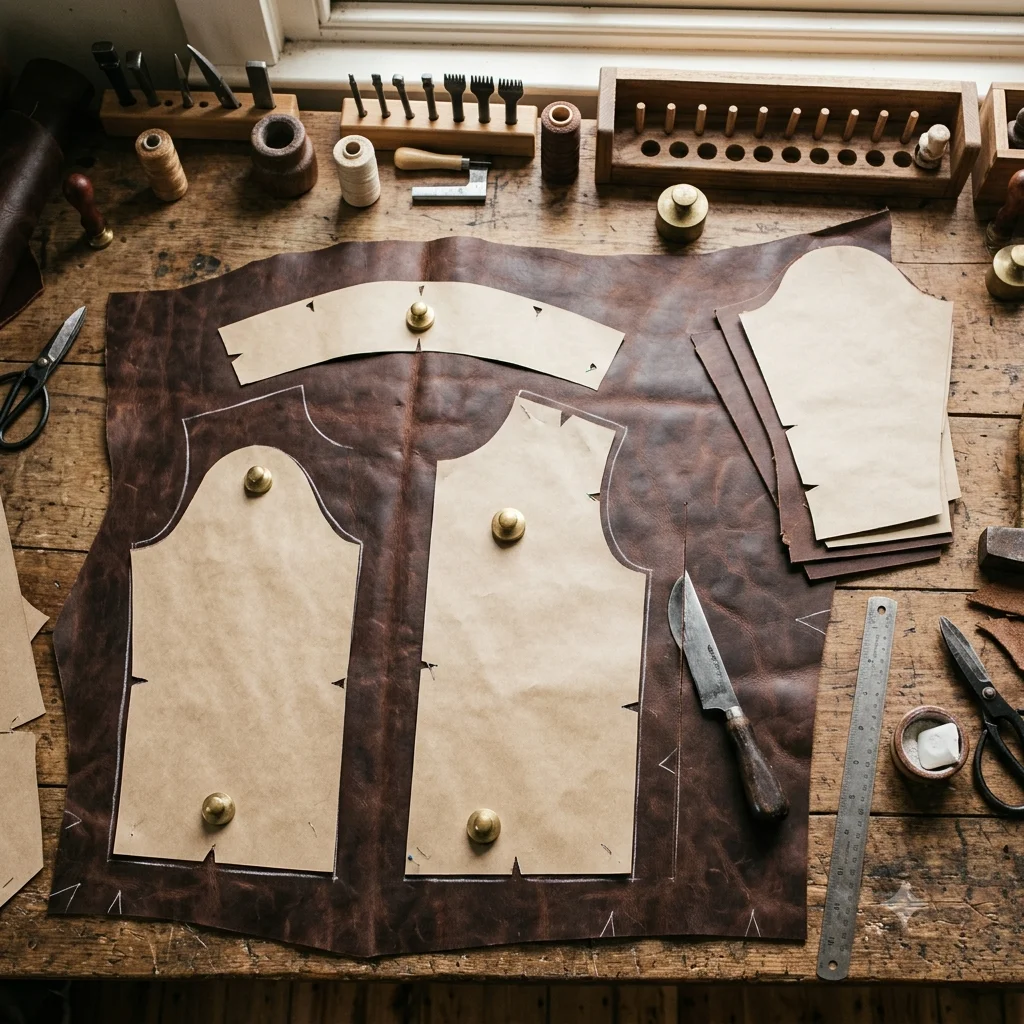
A hide is judged on four things before we accept it: the natural grain, how it drapes at the weight we need, whether it will get better with wear rather than worse, and whether the finish lets it breathe. That last one matters more than it sounds. A heavily sealed surface looks flawless in a photograph and never develops a patina.
We work across full-grain, nappa, and suede because they behave differently and suit different garments. A structured biker jacket and a soft unlined blazer are not asking for the same material.
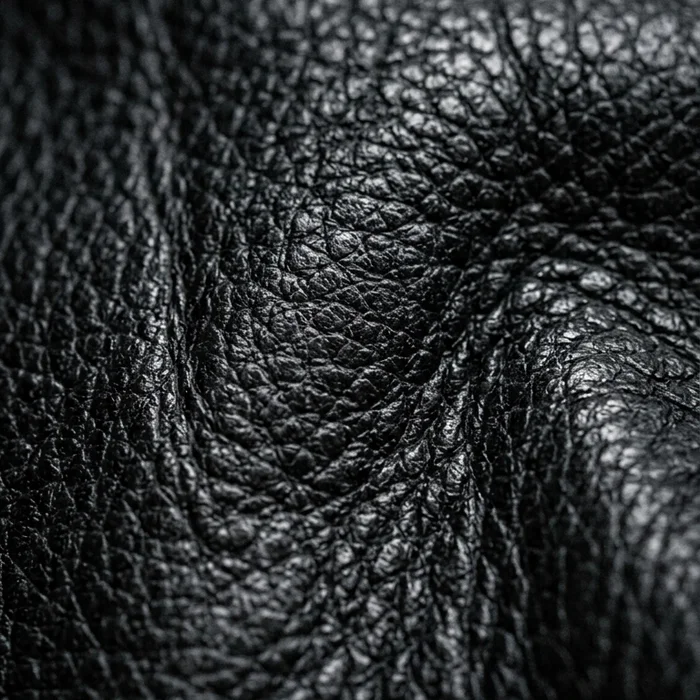
Full-grain
The outermost layer, left uncorrected. Strongest, and the most willing to develop character.
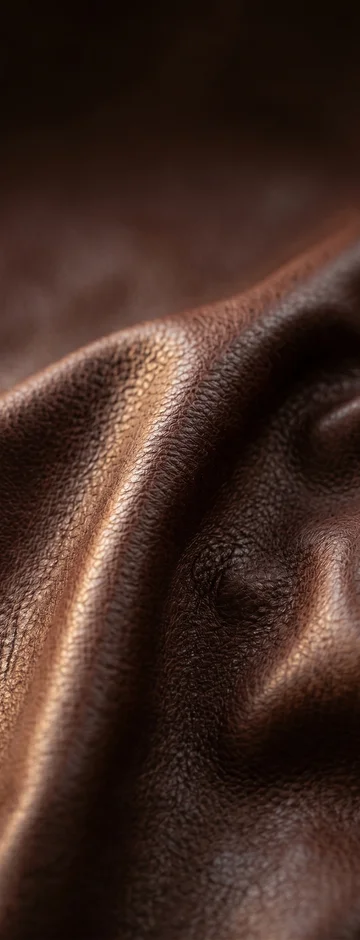
Nappa
Soft and fine-grained, with a close drape. Chosen where the garment needs to move quietly.
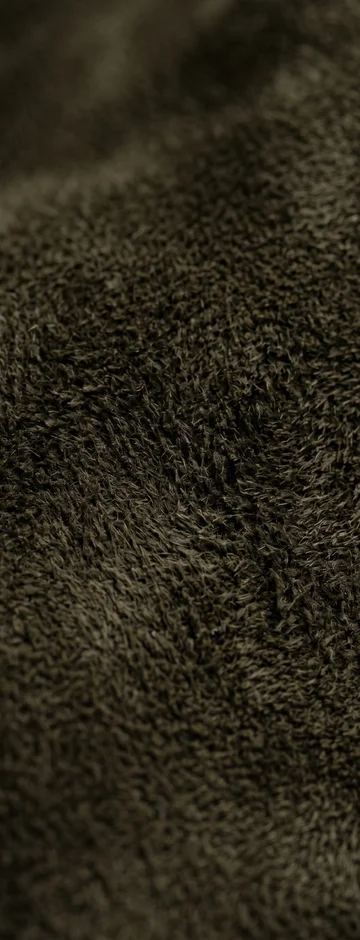
Suede
Napped on the underside for a matte surface. Lighter in hand, warmer in tone.
How a piece is built
Seams are placed where they add strength and stay comfortable, which is not always the same line a pattern book would give you. Panels are shaped to follow the body without gripping it. Reinforcement goes where the stress goes — shoulder, elbow, the base of a zip — and stays out of the places that need to flex.
Hardware is treated as working structure rather than trim. A zip should run smoothly on the hundredth pull and look like it belongs on the garment, not like it was added to it.
Fit, as a standard
Fit is the part most leather brands quietly skip. A jacket can be made from excellent hide and still sit badly across the shoulder, and no amount of material quality rescues that.
We check every pattern for balance across shoulder, chest, waist, and length — then check it again in motion, because a garment that only works standing still does not work. What we are looking for is the absence of tension: no pulling at the back when you reach forward, no distortion at the closure, a natural line when your arms are down.
Every garment is reviewed against those standards before it leaves the atelier.
Built to be repaired
We design for the possibility of opening a garment back up. Seams can be reworked. Linings can be replaced. Hardware is chosen partly on whether we will still be able to source it years from now.
Wear is not a fault. A crease at the elbow and a darker patch at the cuff are the garment doing what it was made to do. The most responsible thing we can build is something that stays in use, so care guidance and alteration are part of the product rather than an add-on to it.
If something needs attention, write to us at hello@theleatherbase.com.
Where we sit
There is a wide gap between leather sold on price and leather sold on a name. One wears out. The other asks you to pay for the logo. We are trying to occupy the space in between — premium without the distance, careful without the ceremony.
We would rather be judged on how a jacket sits across your shoulders in the third year than on anything written here.